As an Amazon Associate I earn from qualifying purchases. Some links on this page are affiliate links — if you buy through them, we may earn a commission at no extra cost to you.Disclosure
Filter by the label
EPA label and maker figures only
Top pick of 3 on this page. Tap a label filter to narrow it.
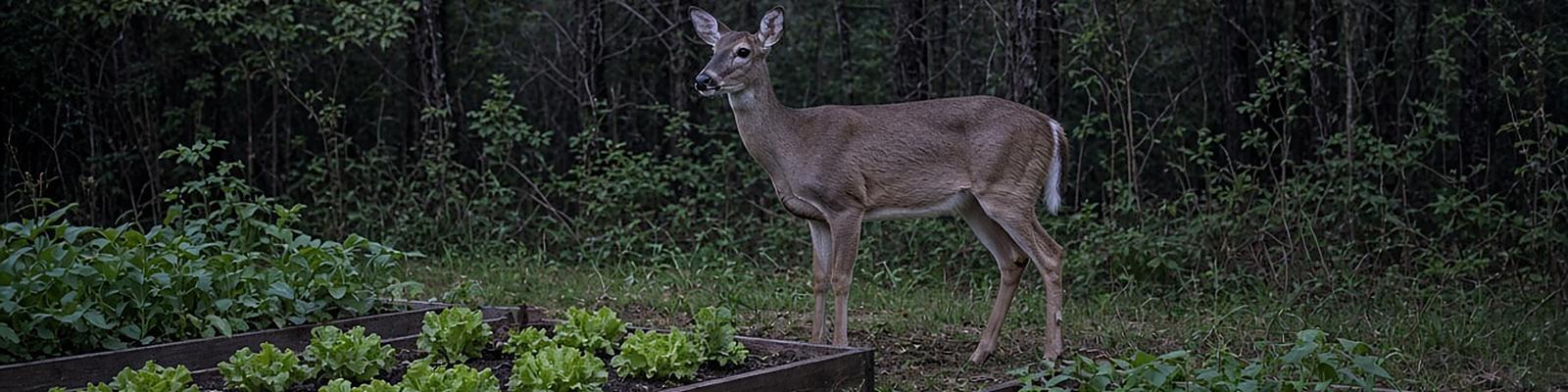
In most of the US, white-tailed deer breed in fall, with activity peaking around October and November. Bucks travel farther and pay less attention to roads and fences, and does move to avoid them. The result: more deer in yards, more rubbed saplings, and more deer on roads at dawn and dusk.
What you see
Why in fall
What to do
Bark stripped from young trees at knee to waist height
bucks rub antlers to mark areas
wrap trunks or add a cage of wire around saplings until spring
Fall plantings and bulbs eaten
deer fatten before winter
plant after the peak, or cover beds with netting at night
Deer crossing the same yard path at dusk
travel routes widen during the rut
a motion sprinkler on that path until hard frost
Deer on roads near woods and fields
more movement at dawn and dusk
slow down at those hours; where one deer crosses, expect more
Motion sprinklers need a hose and above-freezing nights, so in cold states they are a fall tool that comes in before the first hard freeze. A camera on the path for a week shows when deer cross, which tells you when the sprinkler needs to be armed. For a permanent fix in a vegetable garden, a fence tall enough for deer is the long-term answer; the garden deer page compares options.